"Smart" Decisions

I am assuming you think it is smart to sell when markets hit all-time highs or to stay away when they crash, protecting capital, booking profits, or waiting for clarity. It sounds rational, but this instinct is quietly destroying your wealth.
Do you think it is possible to invest in a mutual fund that earns 12% yearly but still end up with 8% and lose 4%?
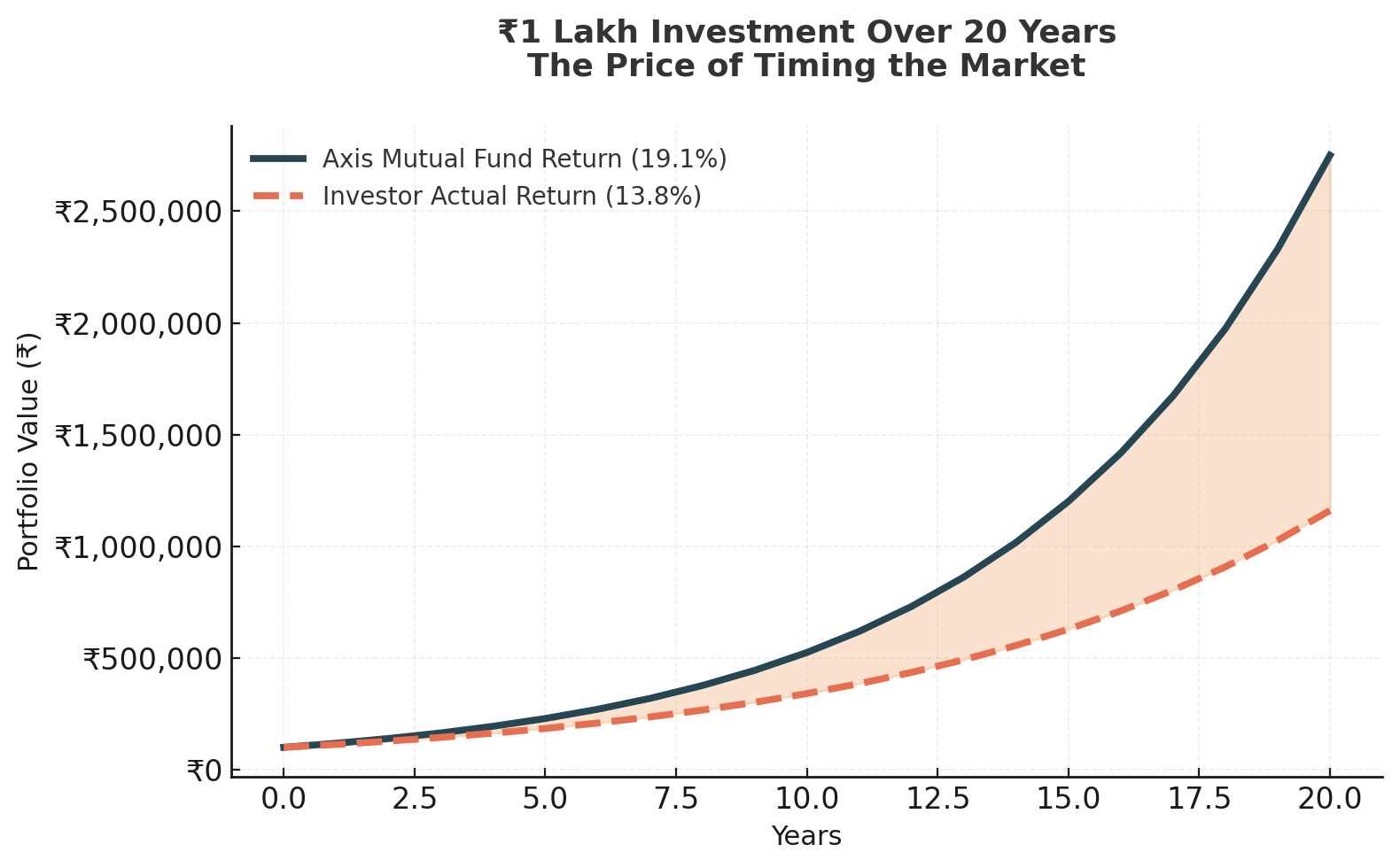
Yes, you have lost 4%. Over the last 20 years, studies by DALBAR and Morningstar have found that investors underperformed the mutual funds they invested in by 3% to 4% annually due to poor timing and a lack of discipline, buying when markets rose and selling when they fell. Short-term success, such as booking profits or avoiding losses, blinds investors to the benefits of long-term compounding. Every time you break the cycle, your wealth gets quietly destroyed.
If you invested ₹1 lakh in an Axis Mutual Fund and stayed with it through thick and thin, your investment would have grown to ₹27.5 lakh at 19.1% CAGR over 20 years. But the same investor in the same fund, driven by panic or greed, buying high and selling low, earned only 13.8% which is ₹11.6 lakh. That is half your wealth gone, not because of a bad fund but because of irrational behavior.
Why do we destroy our own wealth?
The reason behind this destruction is the need for control. Many investors believe switching funds, chasing hot sectors like AI or EV, or timing the market will help them maximize returns. This illusion of control kills compounding, which is the only engine that builds real wealth.
How do I fix this?
The fix is discipline. Mutual fund SIPs were built to fight this behavioral bias. They help you invest a fixed amount monthly, irrespective of market mood, allowing cost averaging and steady long-term returns like the fund itself. You should own at most three diversified mutual funds, a flexi cap, a small cap, and a debt fund (my portfolio is built this way, not investment advice). Never cancel your SIPs when markets fall or rise.
Think of your mutual fund SIP like buying a house on EMI. You commit to monthly payments whether property prices are up or down. You do not track your house price daily, you stay disciplined, make payments, and after 15 to 20 years, you build substantial wealth. The reason almost everyone makes money in real estate is not because property is a superior asset class but because they stay invested long enough to let compounding work. If you apply the same patience to mutual funds or stocks, the results will surprise you.
Easy money in the stock market is a scam.
“The stock market is a device for transferring money from the impatient to the patient.” Warren Buffett